20 Pro Ideas for Choosing Dress Fabric in Birmingham, Walsall and Lichfield
Wiki Article
The Benefit Of Custom-Made Curtains: How They Shine Over Ready-Made Curtains Every Time
The choice between curtains that are pre-made and curtains made to order is often made as a matter of cost or luxury. This is a mistake. Custom-made curtains are completely different from curtains that are mass-produced. They represent a technical technology in your living room that deals with light, the sound, proportions, and durability. They are not just decorative, but they also serve as filters for the environment. They are designed with precision starting with the fabric. This comprehensive look at 10 crucial, yet often unnoticed benefits of the custom route. It shows how it combines resources from Birmingham’s fabric warehouses to the trimming specialists at Lichfield to address issues that your windows did not have.
What you need to be aware of about the Top 10 things:
1. "Reveal" is the "Reveal" is the Precision of the "Impression: Architectural Integration over Window Coverings.
In front of the window, curtains that are ready to be made are set to hang. Custom-made curtains are created to complement the design of the window. The key measurement is "reveal"--the precise distance between the curtain's edge and the frame of the window or wall when the window is opened. Professional designers calculate this down to the millimeter. This makes sure that curtains are stacked perfectly back, without blocking views or light, and are perfectly aligned with arches. Standard sizes no longer have floating around in a shakey, unstable manner. This service is offered by Birmingham fabric shops who are experts in tracking and brackets.
2. The secret to professional drapery silhouettes is the "Fullness Factor".
This is the largest visual variation. Ready-made panels have a ratio of width-to-rail (fullness), usually less than 1, and are flat. Fullness values of 2.5:1 or 2:1 is typical for curtains made to order. That means that for a 2m rail, you need to use 4 to 5 metres of curtain fabric. This excess material is permanently pleated into the header. It forms luxurious, deep-filled folds which form natural, constant cascades, called the "stack". This offers superior light blockage and insulation. For this, the fabric must be purchased by the meter. Proper curtain fabric stores provide this service.
3. Fabric Sovereignty. Escape the "Domestics Ghetto".
Ready-made curtains are almost exclusively made from a narrow range of mass-produced "domestics" fabric. Customisation lets you access the entire range of the contract and decorative fabric universe. For example, you can choose upholstery-weight fabrics with exceptional durability and a light extinguishing or delicate dress fabric like a sheer Silk to create a soft glow. A heavy wool can be bought from a Birmingham shop to dampen sounds, while a linen blend fabric from the Lichfield shop is a great option for a pure, textural appearance. The finish, the fibre and weave is selected in accordance with the performance and aesthetic requirements of the project, and not based on cost efficiency.
4. The Lining and Interlining Stratigraphy A Multi-Layered Window Engine.
Curtains that are ready-made offer, at most, a basic liner. Custom-made curtains look like an open-face sandwich. The fabric used to make the face is only the top layer. A cotton drill liner offers stability and shields the face from UV fading. The critical third layer is interlining, which is a soft silky wool or synthetic layer that is sandwiched between lining and face. It provides mass, body and unbeatable thermal insulation. The drape transforms, even a medium-weight fabric feels opulent. This intricate construction is the hallmark of a skilled workshop and goes beyond the single stitch design of ready-mades.
5. Engineering of the head: the secret mechanisms of hanging and operation.
The curtain's head (where the hooks are) is the motor. The ready-mades come with standard tape and hooks that are prespaced. Custom curtains are created using engineered headers - deep hand-stitched folds (like triples, goblets or doubles) that are sewn on an incredibly strong buckram backing. This allows you to have complete control over the form the size, depth and shape of the pleats. The header type is chosen depending on the fabric's weight the pole's style, size, and formality. When you deal with a fabric shop that recommends a designer custom-designed engineering, this will be analyzed in depth.
6. The Hem Weighting Ceremony The Art and Science of the Perfect Perpendicular Falls.
A curtain with a straight, vertical lines has been weighted. Weights are sewn to the corners of the hems as well as across the sides. They add tension through drawing the fabric taut and against its own drag. This eliminates any outward or inward bow. The curtain will then fall in a single smooth plane between the ceiling and the floor. This tiny, almost invisible aspect is what gives custom-made curtains their powerful, stable appearance in rooms. It's a stark contrast to the frequently fluttering, unsubstantial drape of a pre-made panel.
7. Alchemy of the Problem-Window: Converting imperfections into strengths.
There are numerous ways to customize. Has a heater been installed beneath your sill? The custom-made solution is a sill's length which is precisely measured using the help of a tie-back and weighted holdback. This will let heat directly to the room. A sloped attic window? The curtain rail can be bent to fit the angle, and the curtain cut with a slope that matches. A row of windows that are not in harmony? A single, unifying pelmet or track can be created. Local Walsall manufacturers, well-versed with the area's Victorian terraces and modern additions, are adept at the space-specific, practical solutions.
8. The Local Ecosystem Actitivation From Fabric Bolts to into the Finished Installation.
Custom-made curtains are a way to build the local craft community. Fabric shops are a good starting point. Perhaps you'll discover a striking design at Birmingham’s Rag Market or a delicate linens from Lichfield. The fabric shop will recommend an expert curtain maker that can subcontract to a metalworker in the Jewellery Quarter for a unique pole or a woodturner who can make finials. The curtain maker is an installer who is familiar with local wall types, such as the solid brick or plasterboard. This collaborative hyper-local chain encourages craftsmanship, promotes accountability, and creates products deeply rooted to regional skills, unlike the anonymous worldwide chain of ready-mades.
9. The longevity Equation Repairability, Cleanability, Adaptation.
Custom-made curtains are an excellent investment for decades to come and not just for only for a few months. They are constructed to be maintained. The top-quality curtain fabric can often be professionally cleaned without damage. Seams and stress points are strengthened. The panels damaged by sunlight can be reconstructed from a single sheet of fabric. A skilled tailor can modify the curtains to match new windows when you are moving. This circular, reversible time frame is in stark contrast to the disposable, just replacement of faded models of curtains that are already made.
10. The Sensory and Psychological Payoff: The Intangible Weight of Perfection.
The benefit goes beyond the measures. The smooth, silent motion of a track which is weighted. The floor-to-ceiling curtain is interlined to offer total darkness. The way precisely calculated folds can create afternoon light. Confidence that each detail was carefully thought out including the thread color to the tie-back. This creates a profound feeling of calm, order, and tailored comfort. The result is a natural contact with the material. It makes a connection to the maker, place and a cellophane wrapped standard-sized panel. View the best fabric by the metre for website info including curtains made to measure, curtain shop, curtain on the window, tie backs for curtains, curtain sizes, curtains buy, curtain fabric shop near me, curtains in a window, blinds with fabric, curtain fabric uk and more.
Dress Fabric Adds A Special Spin To Your Customized Curtains
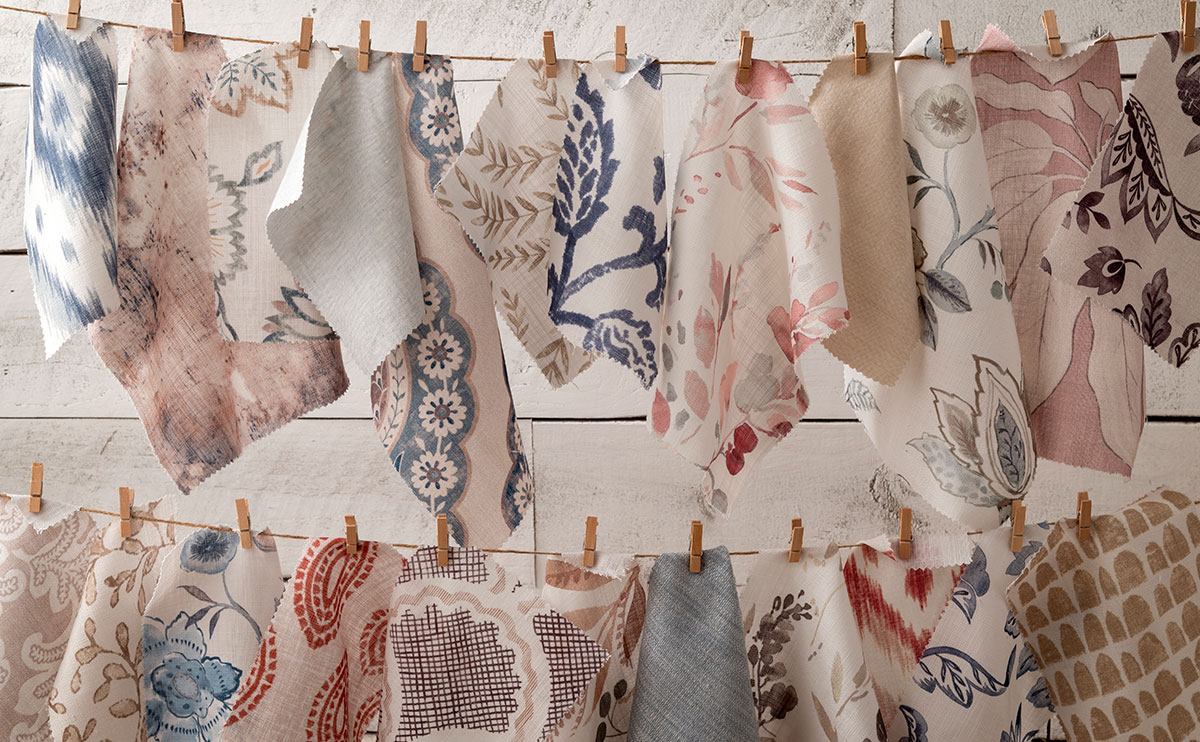
While curtain fabric is vast, they operate within some parameters such as durability, weight, and light management. Making use of dress fabric in custom made drapes is not simply a substitute, it is a deliberate and an innovative leap. This crossover uses the intricate patterns, colours palettes and fluid drapes of garment textiles to give windows a character that is unattainable with standard furniture. This is not an easy, risk-free exchange. It requires a sophisticated understanding of material science and inventive construction. From the haute couture silks of a Lichfield boutique, to the striking cottons of Birmingham's markets, this guide reveals the 10 essential tips for effectively reimagining dress fabrics as drapery, transforming a possible design faux pas into a masterstroke of unique interior design.
The Ten Things You Must Be Educated About:
1. Dress Fabric: A Component Not a Stand-Alone.
The dress fabric isn't enough to be curtains. Its primary purpose becomes to give a stunning "face." It is crucial to pair it with a subtle structure. This involves backing it with a strong neutral calico (a technique called 'underlining' in dressmaking) to provide body and opacity, before applying a standard lining and interlining. This three-layer sandwich stabilises the often lighter, more elastic dress fabric, reducing the strain on seams and enables it to drape with the authority of a fabric for furniture. A curtain maker familiar with this technique is essential; many in Walsall or Birmingham's workrooms might hesitate, but a Lichfield-recommended artisan, versed in delicate cloth, will understand.
2. Sunlight and Sanctuary Test Prioritise North-Facing Windows or Low-Light Windows
Most successful are rooms which shield the fabric from extended exposure to direct sunlight. The ideal locations are a north-facing reading nook or a bedroom with shaded window. The use of silk that is delicate or viscose that has an image on a window that faces south can lead to fiber degradation and rapid fade. This geographical consideration should dictate your project's location before you even step into the shop. You can narrow your search to "any beautiful fabric" to only "a gorgeous fabric for an area that is sheltered."
3. The Lichfield Loophole.
The fabric stores in Lichfield are ideal for hunting. The most expensive dress fabric is usually sold in bolt-ends of 3-5 metres that are not sufficient for a gown but ideal for a design window or pair of curtains for a cafe. These remnants, from brands like Liberty or European mills, feature exclusive patterns and superior fabrics at a bargain for soft furnishings. This limited metreage often forces the use of innovative and specialized applications, like the dressing table skirt or canopy instead of full-length curtains for the living room.
4. The Width Mismatch calculation: Embracing seams as a design feature.
Dress fabrics are generally smaller (115cm to 140cm) than curtain fabrics (137cm and 150cm). To achieve the desired fullness (2.5xrail width), more vertical seams are required. Make the seams into a focal point, rather than concealing them. Choose a contrast piping that comes from Lichfield's exquisite haberdasheries and inserted into each seam. Also, you can run an elongated strip of upholstery fabric across each seam. This transforms an everyday requirement into a stylish, styled look inspired by fashion, and mirrors the structured edges of a tailored suit.
5. The "Upholstery Fabric Partnership": A Coherent Hybrid.
Pure dress fabric curtains look enchanting; the combination of them with upholstery fabric grounds the scheme. Utilize the dress fabric to highlight the curtains. A wrapped border, an leading edge that is contrasted or a layered, pelmet can be layered over solid, heavyweight fabrics. You can also use less expensive dresses (a millimetre from Birmingham's Rag Market), while still providing the similar light blocking and thermal mass that makes a great furniture fabric. It creates an interesting dialogue between the delicate, and the substantial.
6. The formal-fluid spectrum combines fabric type with curtain style.
Not all styles of curtains work with formal fabrics. Map the garment's intended use to the function of the curtain. For a tailored flat-pleated, well drawn curtains, a structured brocade or dupion, intended to be worn in formal attire, works great. The fluid crepe or jersey used for flowing dresses is ideal for "puddled" loosely gathered curtains with an organic and relaxed drape. A Birmingham vendor might just see "fabric by the metre" but in a Lichfield shop, you can talk about the "drape coefficient" and how it influences the curtain's header as well as its construction.
7. The Care Cycle Conundrum - Plan for Delicate Maintenance
It is impossible to make custom curtains out of clothing fabric. Their cleaning and care are an important aspect of their story. It may be necessary to steam instead of washing them, use a gentle vacuum with an attachment for brushes or rotate the furniture according to seasons in order to equalize light exposure. It is important to make this choice carefully. Ask about cleaning when sourcing. A Walsall store might offer advice on practicality while the Lichfield shop may talk about the patina that natural linens and silks develop over time to become a quality.
8. The Birmingham Market Foray: Searching Out Theatrical as well as Heavier Clothes Cloth.
Birmingham's markets have stalls devoted to costumes, theater, or reenactments of historical events. You will find there materials that are heavy and more durable, like velvets designed for cloaks and coats, heavy woolen twills or nets with a lot of embroidery. The fabrics already have some of the strength and body needed for curtains. Therefore, they require less structural reinforcement. The Birmingham excursion is turned into a treasure-hunting expedition for unusually robust dress fabrics.
9. The Harmony between Top Treatment and Header Hardware Selecting the Most Effective Top Treatment.
The head of the curtain should complement the character of the fabric. A big, rigid pinch pleat will destroy delicate chiffon. You can choose a simple, gathered top an ungainly pole or with a tab hidden to give a more delicate look. For a heavier, dress-jacquard, the classic triple pleat is the best option. Talk to your fabric maker prior to* you finalise the fabric purchase. This will determine lengths cut and stress points. A Walsall workspace may choose to use conventional tape. You must guide them towards an aesthetically pleasing finish.
10. The Narrative Integration: Let your narrative tale determine the mood of the room.
The decision ultimately boils down to narrative. The vivid African wax-print fabric used to create this curtain (found at some Birmingham markets), tells the tale of energy and colour from around the globe. A linen curtain, made from an old Lichfield remnant, originally meant to be a dress for summer and gives a rustic, breezy elegance. This goes beyond simple decor. It demands that the window covering convey significance, turning the curtain from screen into a picture--a framed work of art made from textiles that happened to be cut from a spool of fabric that was labeled for dresses, now moved to a new home and dance with the lighting.